



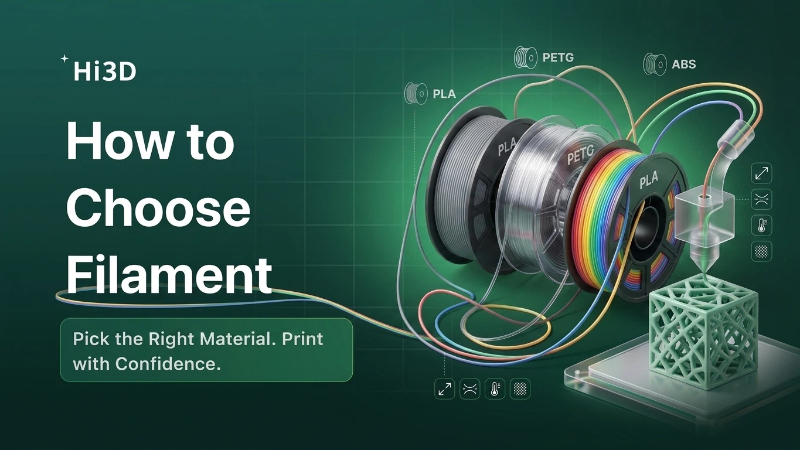
Choosing the right filament is just as important as choosing the right printer.
A strong functional part, a flexible phone case, and a decorative model all require different materials. Using the wrong filament can lead to failed prints, poor durability, or unnecessary frustration.
The good news? Most beginners only need to understand a few common materials to get started.
Start with PLA
If you’re buying your first spool, choose PLA.
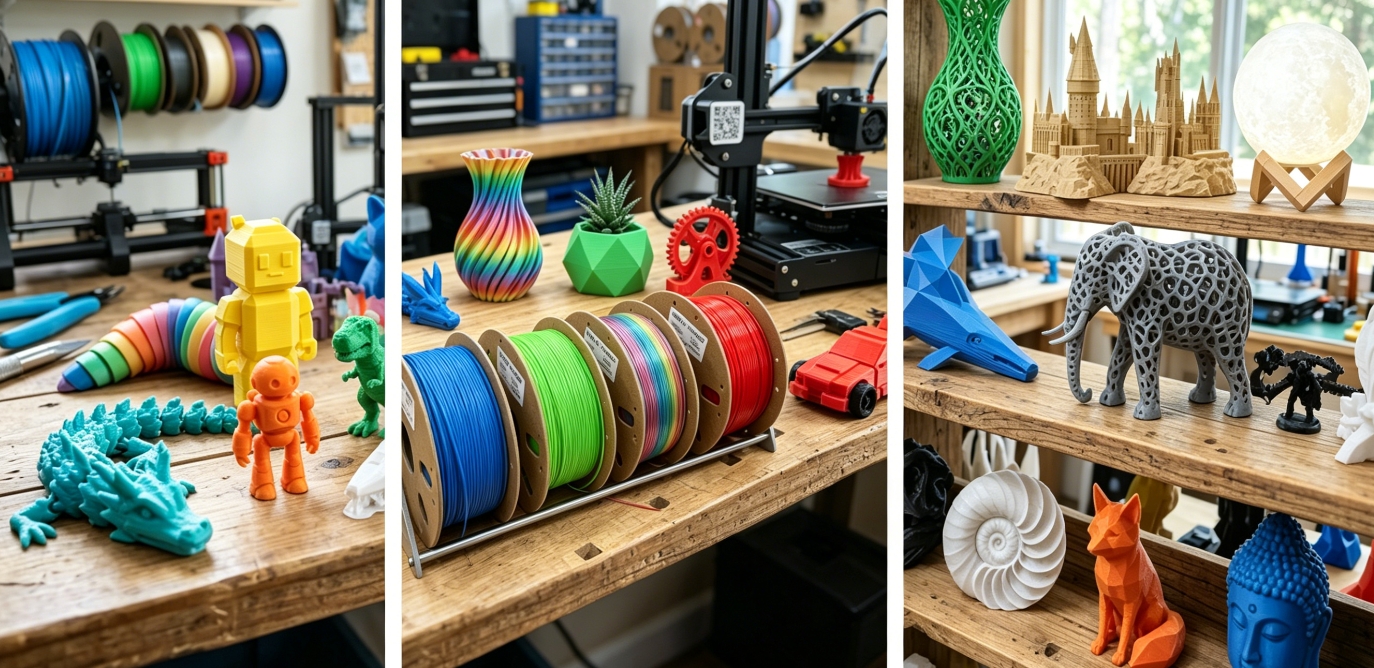
PLA is the most beginner-friendly filament available today. It prints at relatively low temperatures, sticks well to the build plate, and rarely causes major printing issues.
| Best For | Advantages | Limitations |
|---|---|---|
| Decorative models, Toys and figurines, Household organizers, Learning 3D printing, General-purpose projects | Easy to print, Affordable, Minimal warping, Available in countless colors and finishes | Lower heat resistance, Less durable outdoors, Can become brittle over time |
Beginner Tip:Buy a quality PLA spool first and learn the basics before experimenting with advanced materials.
PETG: The Next Step Up
Once you’re comfortable with PLA, PETG is usually the next material worth trying.
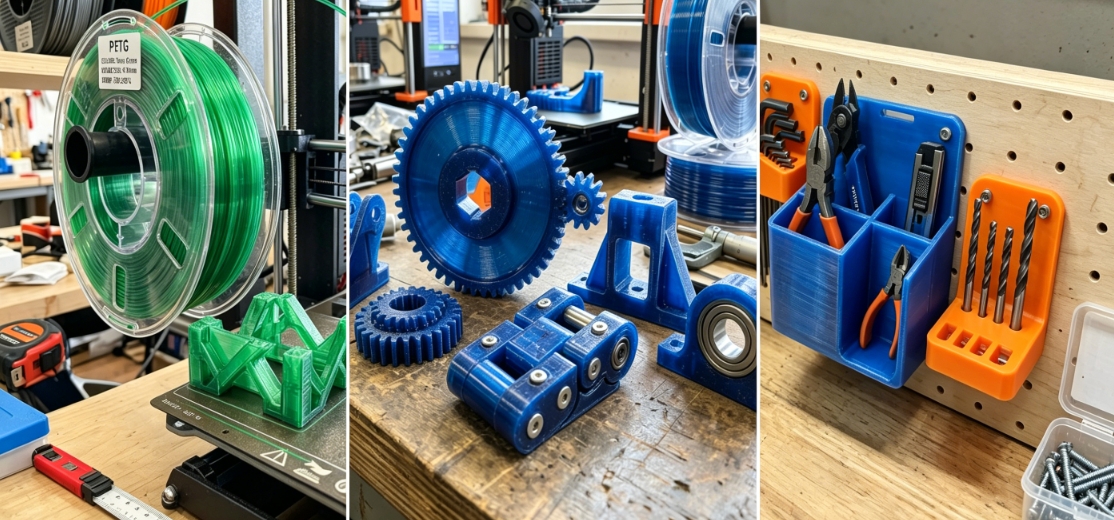
PETG combines the ease of printing of PLA with improved strength, flexibility, and weather resistance.
| Best For | Advantages | Limitations |
|---|---|---|
| Tool holders, Mechanical parts, Outdoor projects, Electronics enclosures, Functional prototypes | Stronger than PLA, Better heat resistance, Water resistant, More impact resistant | More stringing, Requires some tuning, Slightly harder to print |
Typical Use Case: If the object will actually be used instead of displayed, PETG is often the better choice.
TPU: Flexible and Durable
TPU behaves more like rubber than plastic.
Instead of snapping under pressure, it bends and absorbs impact.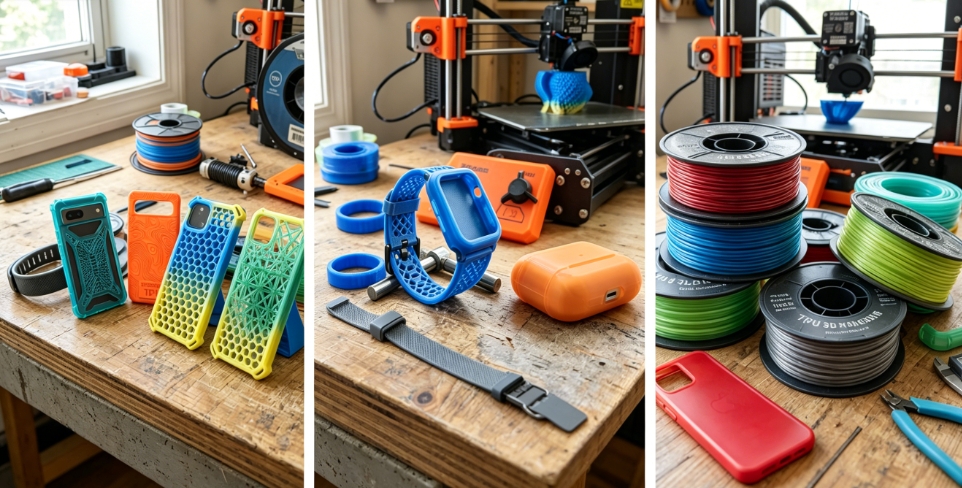
| Best For | Advantages | Limitations |
|---|---|---|
| Phone cases, Protective covers, Wearables, Gaskets, RC car tires | Flexible, Durable, Impact resistant | Slower printing required, More difficult for beginners, Not ideal for highly detailed parts |
Beginner Tip: Try TPU after gaining experience with PLA and PETG.
ABS and ASA: For Tough Environments
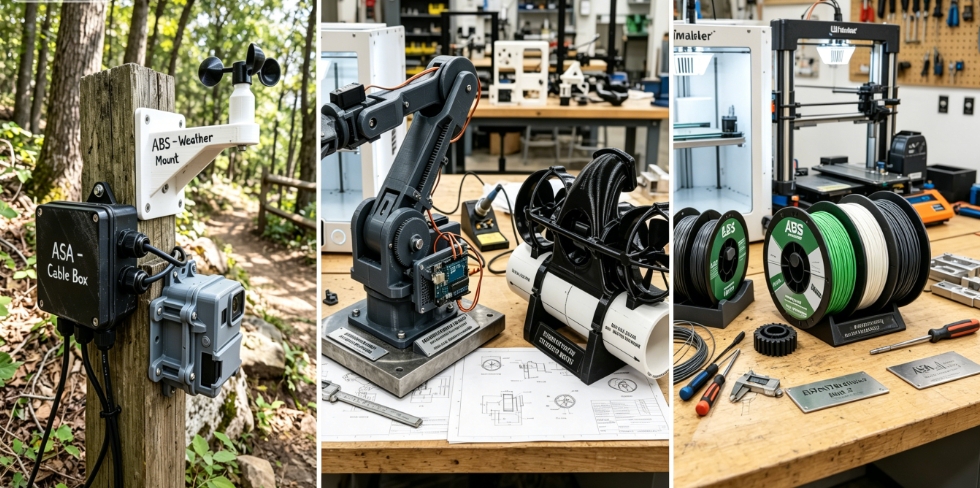
ABS was once the standard material for consumer 3D printing. Today, many makers prefer ASA because it offers similar strength with better UV resistance.
| Best For | Advantages | Limitations |
|---|---|---|
| Automotive parts, Outdoor components, Engineering projects, High-temperature environments | Strong, Heat resistant, Durable | Warping, Strong odor during printing, Usually requires an enclosed printer |
Beginner Tip: These materials are powerful, but they’re rarely the best starting point.
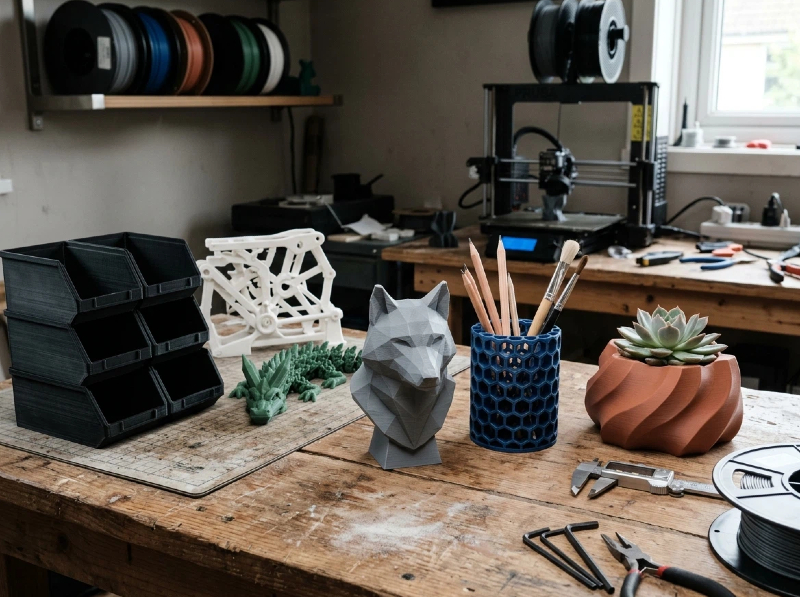
Specialty Filaments
After learning the basics, you may want to explore specialty materials.
| Fliaments | Feature |
|——|——|——|
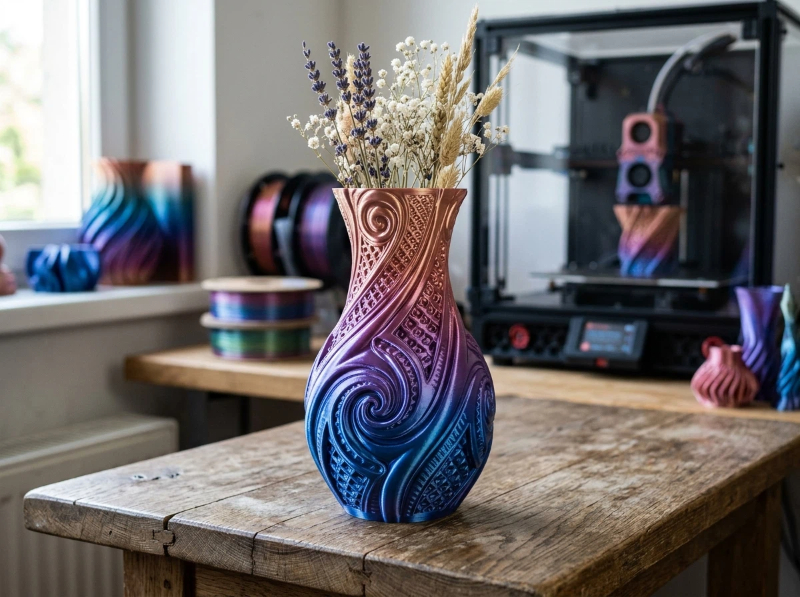
| Silk PLA | Creates shiny, decorative surfaces. Perfect for display pieces and gifts.
| Matte PLA | Produces a premium-looking finish and hides layer lines well. Popular among creators who sell printed products.
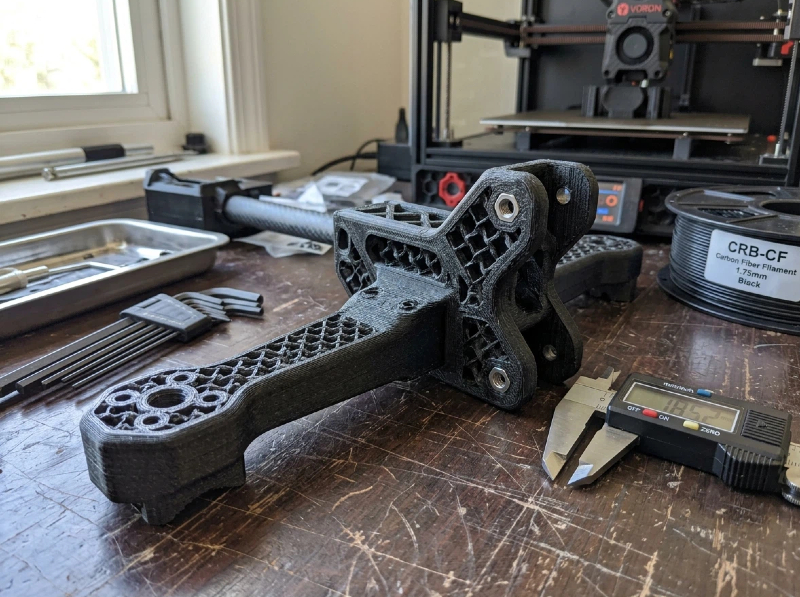
| Carbon Fiber Reinforced Filaments | Adds stiffness and strength. Often used for engineering applications.
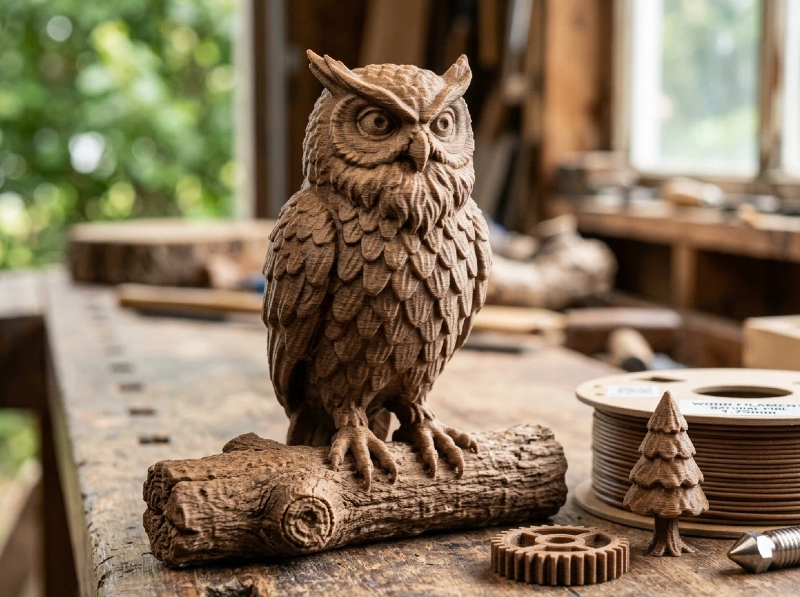
| Wood-Filled Filament | Contains real wood fibers and creates a wood-like appearance. Great for decorative projects and crafts.
How to Choose Based on What You’re Making
| Project Type | Recommended Material |
|---|---|
| Decorative models | PLA |
| Toys and figurines | PLA |
| Functional parts | PETG |
| Outdoor projects | PETG / ASA |
| Flexible products | TPU |
| Automotive parts | ASA |
| Engineering projects | PETG / ASA |
| Display pieces | Matte PLA / Silk PLA |
How to Spot a Good Filament
Not all filament is created equal.
A high-quality spool should have:
Consistent Diameter
Uneven filament can cause under-extrusion and print failures.
Look for brands that specify tight manufacturing tolerances.
Proper Packaging
The spool should arrive vacuum sealed with a desiccant packet.
Moisture is one of the biggest causes of poor print quality.
Clean Winding
Filament should be evenly wound without overlaps.
Poor winding can cause tangles and failed prints.
Reliable Reviews
A strong community reputation is often more valuable than marketing claims.
Warning Signs of Low-Quality Filament
Cheap filament may save money initially, but often costs more in wasted time and failed prints.
Common warning signs include:
- Excessive stringing
- Frequent nozzle clogs
- Inconsistent extrusion
- Brittle filament
- Poor layer adhesion
- Unstable colors
If multiple prints fail unexpectedly, don’t immediately blame your printer. The filament may be the problem
Filament Storage Matters
Even premium filament can become difficult to print if stored incorrectly.
Filament absorbs moisture from the air over time, especially:
- PETG
- TPU
- Nylon
Signs of wet filament include:
- Popping sounds while printing
- Rough surfaces
- Increased stringing
- Weak layer bonding
Storage Tips
- Keep spools in sealed containers
- Add desiccant packs
- Store unused filament away from humidity
- Dry filament if print quality starts to decline
Proper storage can extend filament life from weeks to years.