Entering the visual effects industry is an exciting journey, but it is also highly competitive. Whether your dream is to composite epic superhero battles, simulate massive explosions, or light photorealistic CG environments, raw talent alone isn’t enough. To get noticed by recruiters at top-tier studios, you need a compelling visual showcase of your skills.
If you are a student or a junior artist wondering how to get a VFX job, your top priority should be building an outstanding visual presentation. A well-crafted VFX portfolio and a meticulously edited VFX demo reel are your golden tickets to securing that vital first interview.
In this comprehensive guide, we will break down exactly what studio recruiters look for, how to structure your showreel, and the smartest ways to generate high-quality assets for your personal projects.
What is a VFX Portfolio and Demo Reel?
A VFX portfolio is a curated digital showcase of a visual effects artist’s best work, typically centered around a short video presentation known as a VFX demo reel (or showreel), which demonstrates their technical proficiency and artistic eye to potential employers.
While the terms are often used interchangeably, there is a subtle difference:
- The VFX Demo Reel: A 1-to-3-minute video montage of your best, most relevant shots, usually accompanied by a shot breakdown.
- The VFX Portfolio: The broader online presence (such as an ArtStation page or personal website) that houses your demo reel, high-resolution still frames, resume, and detailed project descriptions.
To land your first job, both elements must work together seamlessly to prove you are ready for a studio production pipeline.
Essential Steps to Build a Winning VFX Demo Reel
Creating a reel that catches a recruiter’s eye requires strategic planning. Here is how to structure your core content for maximum impact.
1. Choose Your Specialization
One of the most common mistakes junior artists make is trying to be a “jack of all trades.” While generalists are valued in small indie studios, major VFX houses hire specialists. Decide what you want to be hired for and tailor your reel specifically to that role.
- Compositors: Focus on seamless green screen extraction, digital matte painting integration, and color matching.
- FX Artists: Showcase complex simulations like fire, smoke, water, and destruction using industry-standard software like Houdini.
- Lighting Artists: Demonstrate your ability to match CG lighting to live-action backplates and set the mood using physically based rendering (PBR).
2. Structure Your Reel for Maximum Impact
Recruiters look at hundreds of applications a day. You have about 10 seconds to grab their attention.
- Start with your absolute best work. Do not save the best for last; the recruiter might not watch that far.
- Keep it short. A junior reel should ideally be 1 to 2 minutes long, and absolutely no longer than 3 minutes.
- End strong. Place your second-best shot at the very end to leave a lasting positive impression.
3. Include Clear Breakdown Videos
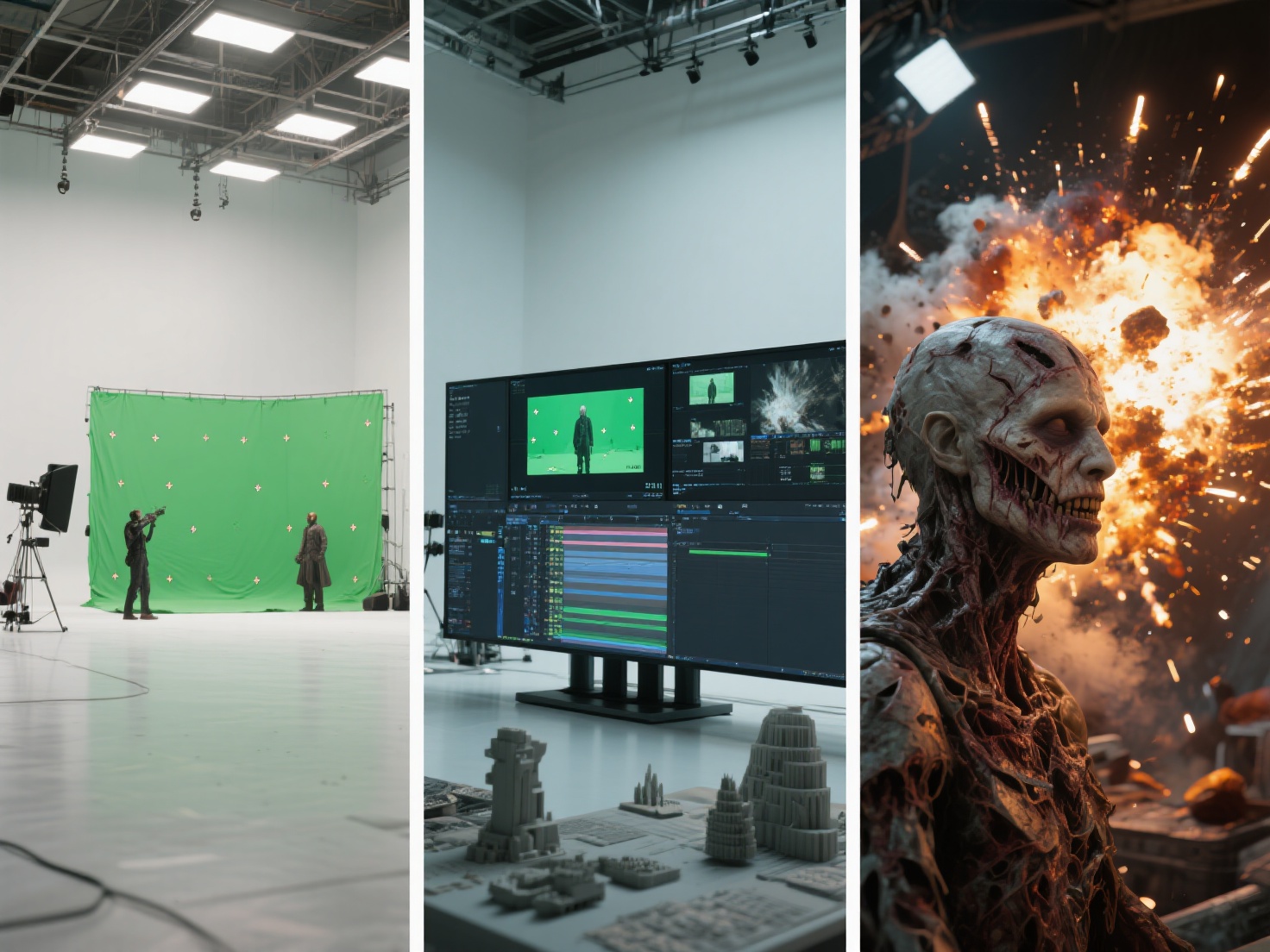
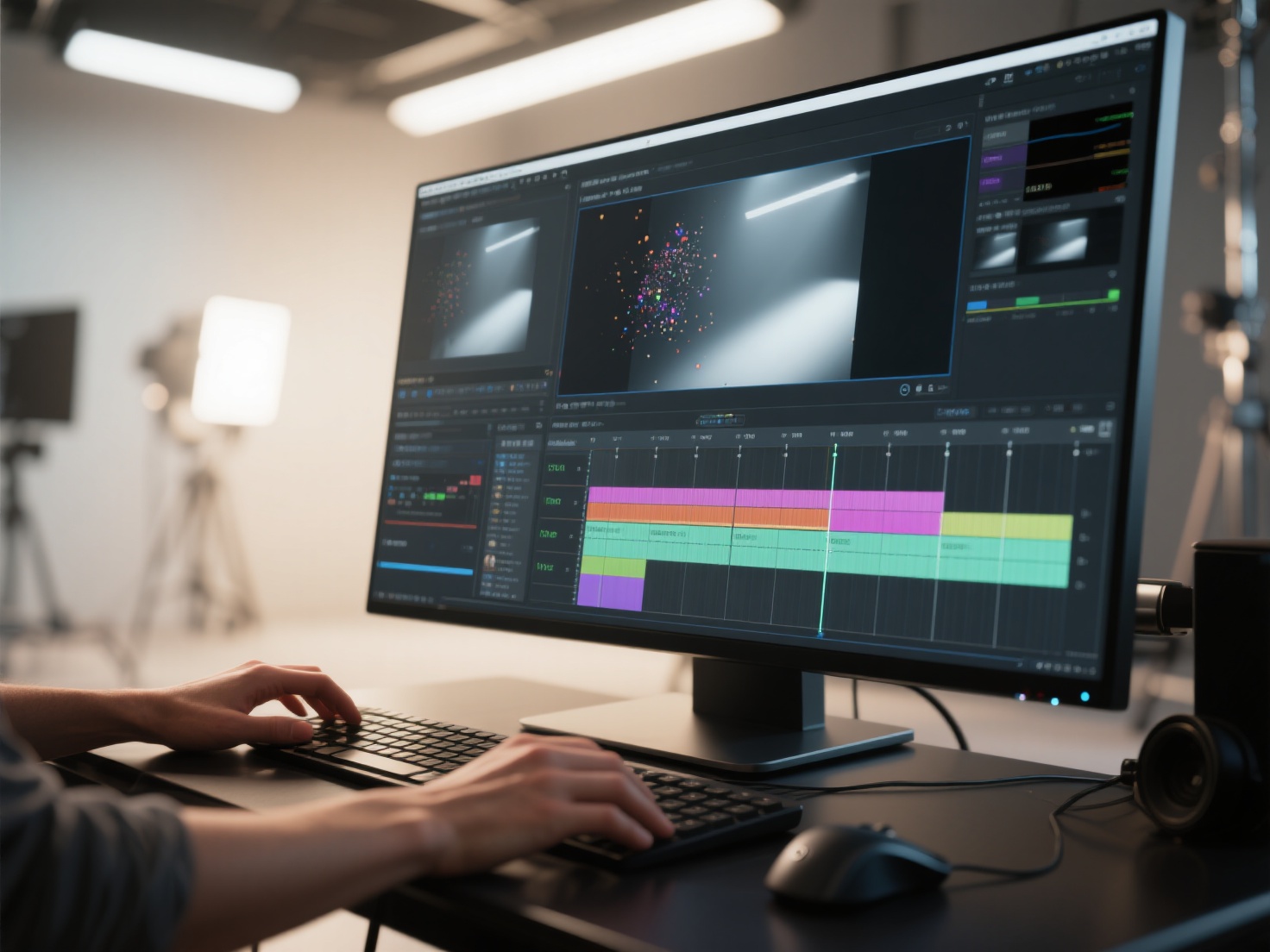
A finished, polished shot looks great, but supervisors need to know how you achieved it. Breakdown videos are sequential wipes or layers that show the progression of a shot from the raw plate to the final render.
Show the wireframes, the unlit gray-shaded models, the simulation passes, and the final composite. This proves your technical competence and shows that your final result wasn’t just a happy accident.
Creating Personal Projects to Fill Portfolio Gaps
When you are a student or junior artist, you likely don’t have major feature film credits to fill your reel. You need to create personal projects that mimic studio-level work.
For example, if you are an FX artist, you might want to show a rigid body destruction simulation of a concrete statue. If you are a lighting artist, you might want to showcase a highly detailed vehicle integrated into a live-action street plate.
The Asset Bottleneck (And How AI Solves It)
The problem with personal VFX projects is that creating high-quality 3D assets from scratch is incredibly time-consuming. If your goal is to showcase your compositing or lighting skills, spending four weeks modeling and UV mapping a 3D prop is a massive waste of time.
This is where integrating next-generation AI tools can revolutionize your workflow. Hitem3D is an AI-powered platform that transforms 2D images into high-fidelity, production-ready 3D models. It is the perfect solution for VFX students who need instant, high-quality assets for their portfolios.
Instead of modeling from scratch, you can simply upload an image to Hitem3D to generate a complex model. Built on the powerful Sparc3D (high precision) and Ultra3D (high efficiency) AI models, Hitem3D offers massive advantages for VFX artists:
- Reconstructs Invisible Parts: Unlike basic photogrammetry, Hitem3D’s Image to 3D technology hallucinates and reconstructs hidden structures, providing a complete asset ready for VFX integration.
- De-Lighted Textures: This is a game-changer for lighting artists. Hitem3D outputs 4K PBR-ready textures and intelligently removes baked-in lighting and shadows. This gives you true, relightable materials so you can match the asset perfectly to your live-action HDRI.
- Film-Ready Geometry: With support for up to 1536³ Pro resolution (up to 2M polygons), the output geometry features sharp edges and clean topology. You can easily export in standard VFX formats like FBX, OBJ, and USDZ straight into Maya, Houdini, or Blender.
By using Hitem3D, you can bypass the tedious modeling phase and jump straight into the specialized VFX work that will actually get you hired.
VFX Showreel Tips: What Studios Look For (and Mistakes to Avoid)
To ensure your application survives the initial screening process, keep these crucial VFX showreel tips and best practices in mind.
Focus on Quality Over Quantity
Recruiters universally agree: three flawless shots are vastly superior to ten mediocre ones. Do not pad your reel with outdated or lower-quality student work just to make the video longer. A single bad shot can make a supervisor question your quality control and attention to detail.
Clearly Credit Your Work
Visual effects is a highly collaborative industry. If you worked on a team project or used a pre-made 3D model (like one generated by Hitem3D), state it clearly. Add a small text overlay in the corner of your video detailing exactly what you were responsible for (e.g., “Responsible for: Lighting and Compositing only”).
Build a Professional Online Presence
Your reel needs a home. Upload your video to Vimeo (preferred by the industry for its lack of compression and ads) or YouTube. Furthermore, build a professional profile on ArtStation and LinkedIn. Many recruiters actively scout for junior talent on LinkedIn, so make sure your profile headline clearly states your specialization (e.g., “Junior FX Technical Director”).
Avoid Common Portfolio Mistakes
- Distracting Music: Do not use loud, aggressive, or copyrighted music. Supervisors often mute reels anyway, so keep the audio neutral and professional.
- Overly Complex Editing: Avoid flashy transitions, prolonged text intros, or dramatic fade-ins. Cut straight to the action.
- Spelling Errors: Triple-check your contact information at the beginning and end of the reel. A typo in your email address could cost you a job.
Conclusion: Fast-Track Your VFX Career
Learning how to build a VFX portfolio is a critical milestone in your career. By choosing a clear specialization, structuring your reel to highlight your strongest work first, and including transparent shot breakdowns, you will immediately stand out from the crowd of applicants.
Remember that recruiters are looking for specific technical skills. Don’t waste your limited time struggling with disciplines outside your specialty. If you need highly detailed, relightable 3D assets to practice your FX simulations, lighting, or compositing, leverage the power of modern AI.
With its high-precision geometry, De-Lighted 4K PBR textures, and a generous Free Retry system, Hitem3D is the ultimate secret weapon for VFX students looking to populate their demo reels with stunning, production-ready assets in minutes.
Ready to elevate your personal VFX projects and build a portfolio that studios can’t ignore? Create For Free today.
Frequently Asked Questions (FAQ)
How long should a VFX demo reel be?
For a junior artist, a VFX demo reel should ideally be between 1 to 2 minutes long, and absolutely no longer than 3 minutes. Recruiters value brevity and high quality. It is much better to have 60 seconds of spectacular work than 3 minutes of average work.
Do I need a degree to get a VFX job?
No, a formal degree is not strictly required to get a job in visual effects. While film schools can provide great networking opportunities and structured learning, studios ultimately hire based on the quality of your VFX portfolio and demo reel. If your reel proves you can do the job, you can get hired.
What should I include in a VFX shot breakdown?
A standard VFX breakdown should visually deconstruct your final shot. You should include the original raw footage (the plate), any roto or prep work, the unlit 3D models/geometry, lighting and reflection passes, simulation passes (like smoke or debris), and the final color-corrected composite.
Can I use AI-generated assets in my VFX reel?
Yes, as long as you are transparent about it and you are not applying for a 3D modeling role. If you are applying for compositing, lighting, or FX roles, supervisors only care about how well you executed those specific tasks. Using tools like Hitem3D to generate background props or simulation targets is a smart way to work efficiently, provided you credit the asset generation in your shot breakdown.