
Creating stunning jewelry is a delicate balance of art, engineering, and material science. At the heart of every great piece lies the perfect stone. However, with thousands of minerals available, the selection process can quickly become overwhelming for both seasoned designers and enthusiastic buyers.
Welcome to the ultimate gemstone guide. Whether you are drafting a bespoke engagement ring or building a custom jewelry collection, understanding the materials you work with is essential. The right choice elevates a simple metal band into a breathtaking masterpiece, while the wrong choice might lead to a fragile piece that chips under daily wear.
In this comprehensive article, we will explore the different types of gemstones, delve deep into essential gemstone properties, and provide actionable advice on choosing gemstones for jewelry that balances aesthetics, durability, and budget.
What is a Gemstone?
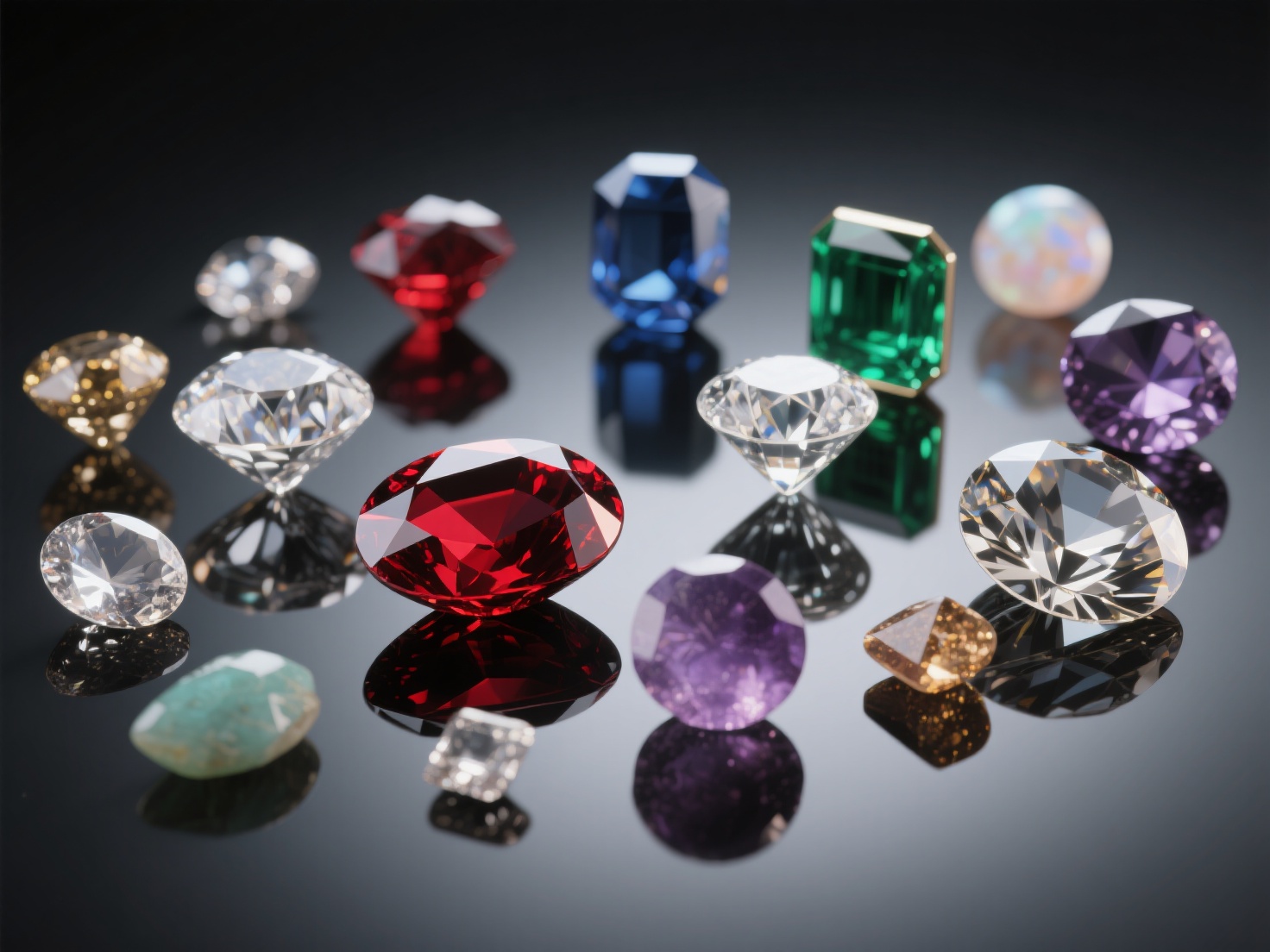
A gemstone is a piece of mineral crystal, rock, or organic material (like pearl or amber) that has been cut and polished for use in jewelry or other decorative adornments. To be officially classified as a gemstone, a material must possess three fundamental characteristics: remarkable beauty, high durability, and relative rarity. Understanding these core attributes is the critical first step in mastering professional jewelry design.
Exploring the Different Types of Gemstones
The jewelry industry traditionally categorizes stones into several classifications to help buyers and designers navigate their options. Here is how the gemstone market is broadly divided.
Precious vs. Semi-Precious Stones
Historically, gemstones were divided into two main categories: precious and semi-precious. While modern gemologists argue this distinction is mostly marketing, it remains a common industry standard.
| Category | Description | Common Examples |
|---|---|---|
| Precious Stones | Highly valued for their exceptional hardness, rarity, and brilliant colors. They command the highest market prices. | Diamond, Ruby, Sapphire, Emerald |
| Semi-Precious Stones | A vast category encompassing all other gemstones. They offer an incredible variety of colors and textures. | Amethyst, Topaz, Opal, Tourmaline, Aquamarine, Garnet |
Natural, Treated, and Synthetic Stones
Beyond the precious and semi-precious labels, it is vital to understand how a stone was formed and processed, as this heavily impacts its value and structural integrity.
Natural Gemstones: These stones are mined directly from the earth. They are cut and polished but remain structurally unaltered. They are the most valuable due to their natural rarity.
Treated Gemstones: Many natural stones undergo treatments to enhance their appearance. Heat treatments are common for sapphires to deepen their color, while oils are often used in emeralds to hide internal fractures.
Synthetic (Lab-Grown) Stones: These are created in laboratories but possess the exact same chemical, physical, and optical gemstone properties as their natural counterparts. They are eco-friendly, highly affordable, and offer flawless clarity.
Evaluating Gemstone Properties: The Four Cs
You have likely heard of the “Four Cs” in relation to diamonds, but these evaluation metrics apply to almost all colored gemstones as well. Understanding these properties will guide you in choosing gemstones for jewelry.
1. Color (Hue, Tone, and Saturation)
For colored gemstones, color is the most critical factor in determining value. It is broken down into three components: Hue (the actual basic color), Tone (how light or dark the color is), and Saturation (the intensity or purity of the color). A highly saturated, vibrant stone with a medium tone generally holds the highest value.
2. Clarity (Inclusions and Blemishes)
Clarity refers to the presence of internal characteristics called inclusions, or external characteristics called blemishes. While buyers demand flawless diamonds, inclusions are often expected in colored stones like emeralds (known as “jardin”). In fact, certain inclusions can prove a stone is natural rather than synthetic.
3. Cut (Maximizing Light and Color)
The cut does not refer to the shape (e.g., oval, pear, round), but rather how the stone’s facets interact with light. A masterfully cut gemstone will maximize its color and brilliance while hiding internal flaws. For opaque stones like turquoise or opal, a smooth, rounded cabochon cut is preferred over faceted cuts.
4. Carat Weight (Size vs. Density)
Carat is the measure of a gemstone’s physical weight, not its physical size. Because different minerals have different densities, a one-carat ruby will appear visually smaller than a one-carat diamond. Designers must always consider a stone’s exact millimeter dimensions rather than relying solely on carat weight when planning a jewelry setting.
Choosing Gemstones for Jewelry Design
Selecting the right stone is not just about picking a pretty color; it requires careful consideration of physics and design mechanics. Here are the core factors to consider when choosing gemstones for jewelry.
Matching Durability to Jewelry Type
Not all stones can withstand the rigors of daily wear. Gemstone hardness is measured on the Mohs Scale (from 1 to 10).
Rings and Bracelets: These pieces are prone to knocking against hard surfaces. They require hard stones like Diamonds (10), Sapphires (9), or Rubies (9).
Earrings and Pendants: Because these items experience much less physical impact, they safely accommodate softer, more delicate stones like Opals (5.5-6.5), Pearls (2.5), or Tanzanite (6-7).
Color Harmony and Metal Pairings
The metal setting significantly influences how a gemstone’s color is perceived.
Warm Metals (Yellow Gold, Rose Gold): These pair beautifully with warm-toned stones like rubies, citrines, and garnets. They can also create striking contrasts with deep blue sapphires or emeralds.
Cool Metals (Platinum, White Gold, Silver): These provide a sleek, modern backdrop that enhances the icy brilliance of diamonds, aquamarines, and blue topaz.
Setting Requirements
The jewelry setting must secure the stone and protect its fragile edges. A delicate emerald, prone to chipping, benefits from a bezel setting where a rim of metal completely surrounds the stone. Conversely, a highly durable diamond thrives in a prong setting, which allows maximum light to enter the stone from all angles, enhancing its brilliance.
Best Practices for Sourcing and Presentation
Whether you are designing physical jewelry or creating 3D digital art, the way you source and present your gemstones can make or break your brand.
Ethical Gemstone Sourcing
Today’s consumers demand transparency. Always prioritize suppliers who offer conflict-free, ethically mined gemstones. Ask for documentation regarding traceability, and consider lab-grown synthetic stones as a sustainable, eco-friendly alternative for environmentally conscious clients.
Gemstone Photography Tips
Capturing the true essence of a gemstone requires skill. Use a macro lens to capture the fine facets and utilize diffused, indirect lighting to prevent harsh glare. For colored stones, daylight-balanced LED lights will reveal the truest representation of the stone’s hue and saturation.
Digital Prototyping and 3D Visualization
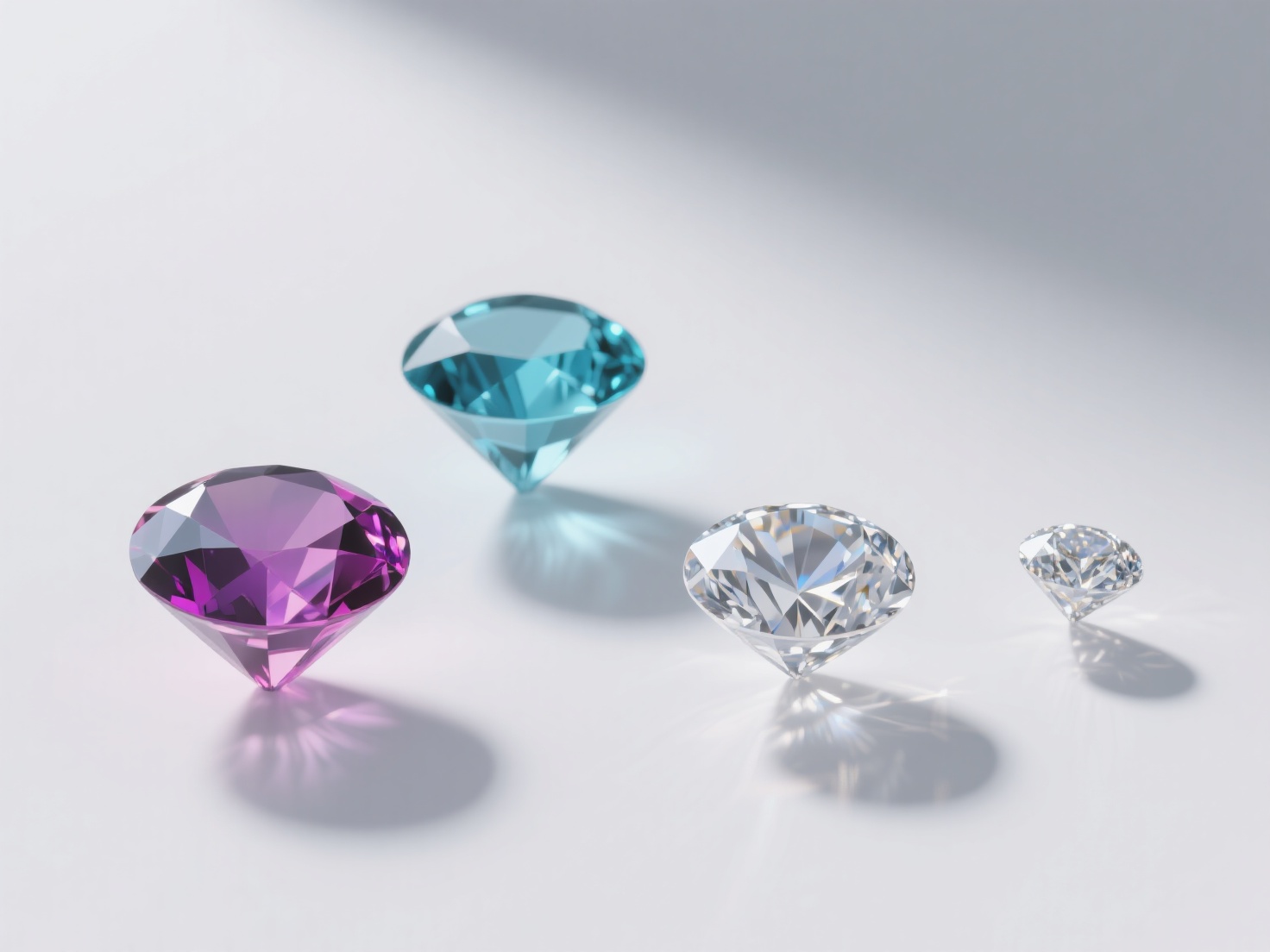
Before committing to expensive raw materials, modern jewelry designers rely on 3D visualization to present concepts to clients. Traditional CAD modeling for complex jewelry and organic gemstone cuts can be incredibly time-consuming. This is where AI-driven tools are revolutionizing the industry workflow.
If you want to rapidly iterate jewelry designs and visualize how specific gemstones will look in various settings, Hitem3D is the ultimate solution. As a next-generation, AI-powered 3D model generator, Hitem3D transforms a simple 2D sketch or reference image into a high-fidelity, production-ready 3D model.
Powered by the in-house Sparc3D model, it guarantees exceptional geometric precision, capturing the sharp edges of intricate prong settings perfectly. More importantly, Hitem3D generates 4K PBR-ready textures utilizing advanced De-Lighted Texture technology. This intelligently removes baked-in lighting from your 2D reference, resulting in true, relightable materials. This means you can drop your generated 3D jewelry model into any digital environment, and the gemstone will refract and reflect light exactly as it would in reality.
Conclusion: Elevate Your Jewelry Design Workflow
Navigating this gemstone guide is just the beginning of your creative journey. By mastering the different types of gemstones, analyzing core gemstone properties, and understanding the mechanics of choosing gemstones for jewelry, you can craft pieces that are as durable as they are beautiful.
Whether you are working with precious diamonds or vibrant semi-precious tourmalines, the bridge between a brilliant concept and a physical product is visual presentation. Embracing modern AI 3D tools allows you to iterate faster, communicate better with clients, and bring your bespoke jewelry designs to life with unparalleled realism.
Ready to revolutionize your design process? Hitem3D allows you to generate print-ready, high-resolution 3D models (up to 1536³ Pro, supporting 2M polygons) in formats like GLB, OBJ, STL, FBX, and USDZ. With a Free Retry system that lets you perfect your results without wasting credits, there has never been a better time to upgrade your 3D workflow.
Create For Free → https://www.hitem3d.ai/create
Frequently Asked Questions (FAQ)
1. What is the most durable gemstone for a daily-wear engagement ring?
Diamonds are the most durable gemstone, ranking a perfect 10 on the Mohs scale of hardness. Sapphires and rubies (both varieties of corundum) are excellent alternatives, ranking at 9, making them highly resistant to scratching for everyday wear.
2. Are synthetic gemstones considered “fake”?
No. Synthetic or lab-grown gemstones are not “fake.” They share the exact same chemical composition, crystal structure, and physical properties as natural mined stones. The only difference is their origin (a laboratory versus the earth’s crust).
3. How can I test my jewelry design before manufacturing it?
The best way to test a design is through 3D prototyping. You can use an AI platform like Hitem3D to quickly generate a highly accurate 3D model of your design from a 2D image. Its direct export integration with slicing software like Bambu Studio and OrcaSlicer makes it incredibly easy to 3D print a physical resin prototype of your ring before casting it in precious metal.
4. Why is my gemstone losing its color over time?
Some natural gemstones, like amethyst and kunzite, can slowly fade if exposed to prolonged direct sunlight. Additionally, everyday dirt, oils, and soaps can coat the bottom of a gemstone in its setting, making it appear dull. Regular cleaning usually restores its original brilliance.