
The manufacturing landscape is undergoing a radical transformation. For decades, traditional subtractive methods like CNC machining dominated production lines. However, as engineers and industrial designers push the boundaries of complex geometry, lightweighting, and rapid production, metal 3D printing has emerged as a game-changing solution.
Once limited to expensive rapid prototyping, industrial 3D printing has matured into a viable method for end-use part production. Whether you are an aerospace engineer looking to consolidate assemblies or an industrial designer creating intricate medical implants, understanding the nuances of metal additive manufacturing is crucial.
In this comprehensive guide, we will explore the core technologies like DMLS and SLM, examine popular metal materials, and highlight how modern AI modeling tools are accelerating the design-to-print workflow.
What is Metal 3D Printing?
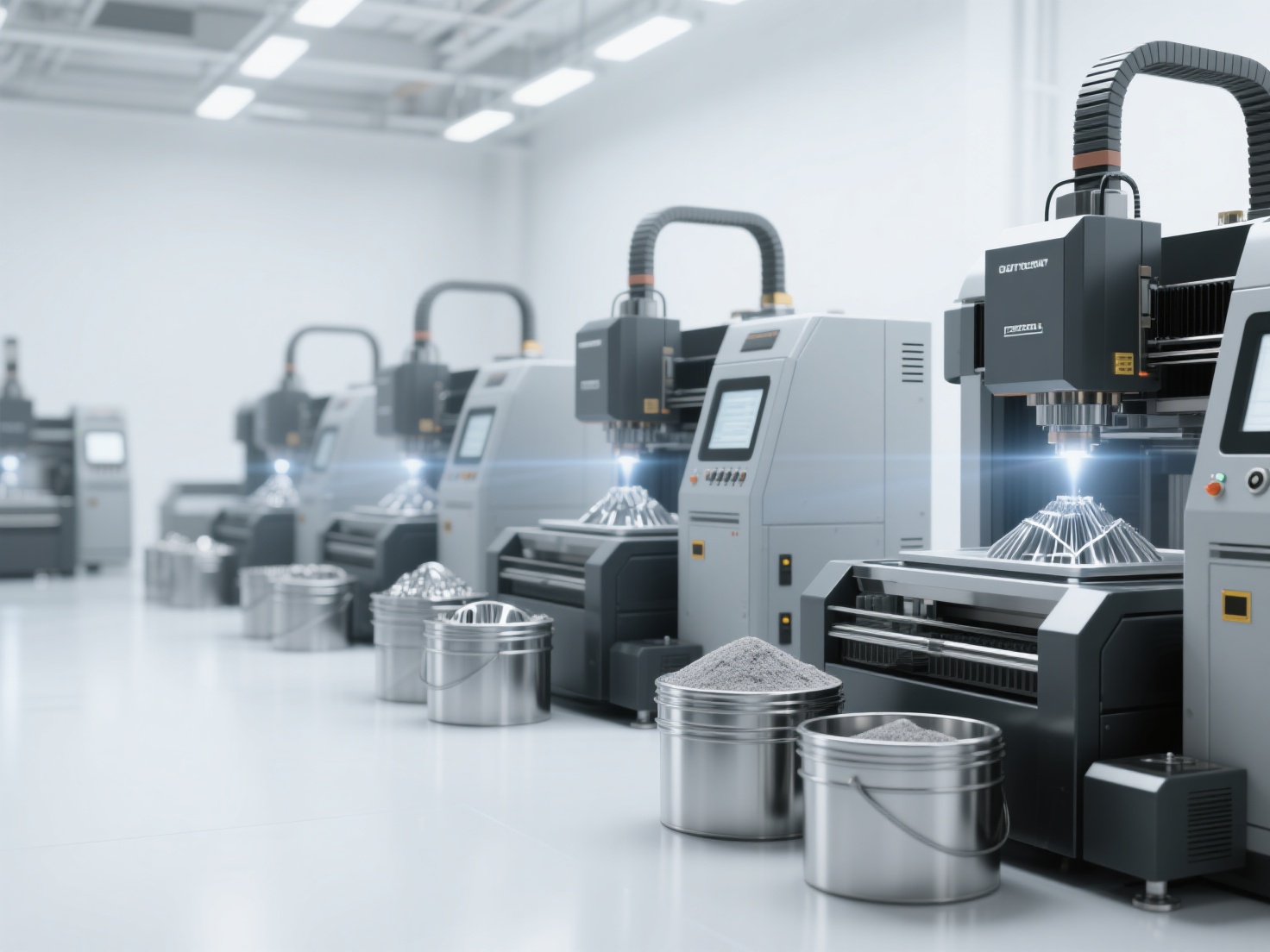
Metal 3D printing, also known as metal additive manufacturing, is an advanced production process that builds solid, three-dimensional metal parts layer-by-layer directly from a digital CAD file.
Unlike traditional subtractive manufacturing—which cuts away material from a solid block—additive manufacturing only places material exactly where it is needed. This allows for the creation of incredibly complex internal structures, such as lattice networks and conformal cooling channels, which are physically impossible to manufacture using conventional casting or machining methods.
Core Metal 3D Printing Technologies Explained
Not all metal printers work the same way. The industry utilizes several distinct technologies, each suited to different materials, precision requirements, and production scales.
1. Direct Metal Laser Sintering (DMLS) & Selective Laser Melting (SLM)
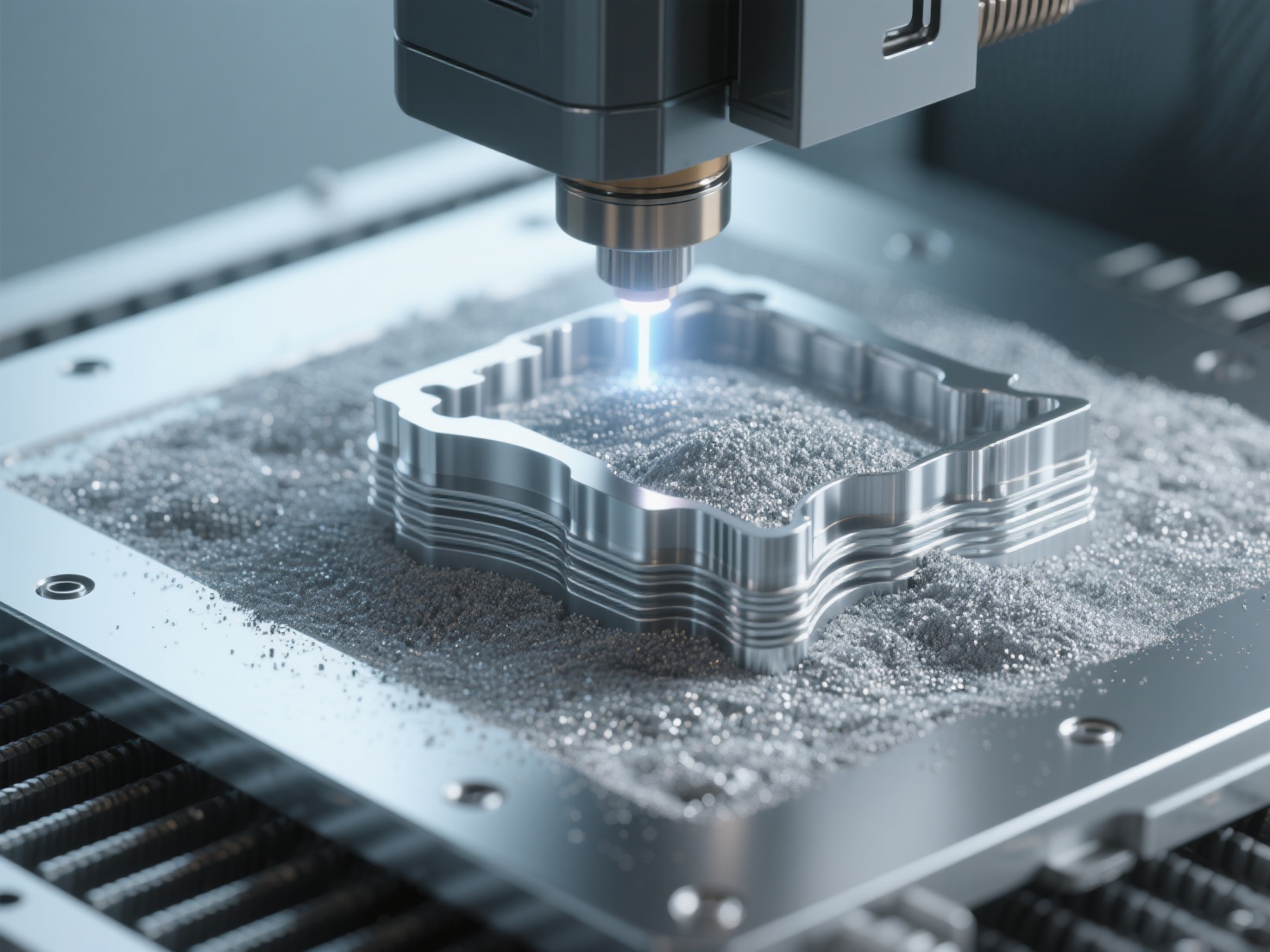
DMLS and SLM are the most widely used powder bed fusion (PBF) technologies. A high-powered laser traces the cross-section of a 3D model onto a bed of fine metal powder, fusing the particles together.
- SLM fully melts the metal powder, making it ideal for pure metals like titanium and aluminum.
- DMLS heats the powder just enough to fuse the particles at a molecular level (sintering), which is perfect for metal alloys.
Both produce high-density, incredibly strong parts suitable for extreme environments.
2. Electron Beam Melting (EBM)
Similar to SLM, EBM is a powder bed fusion process. However, instead of a laser, it uses an electron beam to melt the metal powder. Conducted inside a high-vacuum chamber at elevated temperatures, EBM significantly reduces residual stress in the printed parts. It is highly favored for processing reactive metals like titanium, especially in medical and aerospace applications.
3. Binder Jetting
Metal Binder Jetting does not use heat during the printing phase. Instead, an inkjet-like printhead selectively deposits a liquid binding agent onto a bed of metal powder. Once the “green” part is printed, it is highly fragile and must be placed into a specialized sintering furnace to burn away the binder and fuse the metal particles. Binder jetting is exceptionally fast and cost-effective, making it ideal for medium-to-large batch production.
4. Directed Energy Deposition (DED)
DED uses a focused energy source (such as a laser or electron beam) to melt metal wire or powder exactly as it is being deposited by a nozzle. It is frequently mounted on multi-axis robotic arms. While not typically used for highly intricate details, DED is unmatched for repairing damaged high-value metal components (like turbine blades) or adding new metal features onto existing CNC-machined parts.
Technology Comparison Table
| Technology | Heat Source | Primary Advantage | Best Use Case |
|---|---|---|---|
| DMLS / SLM | Laser | High precision, dense parts | Aerospace brackets, complex tooling |
| EBM | Electron Beam | Low residual stress | Titanium medical implants |
| Binder Jetting | None (Sintering later) | High speed, volume production | Automotive components, consumer goods |
| DED | Laser / E-Beam | Can build on existing parts | Repairing turbine blades, large structures |
Popular Metal Materials Used in Additive Manufacturing
The versatility of metal additive manufacturing is heavily driven by the wide array of available materials. Here are the most common metals used today:
- Stainless Steel (316L, 17-4 PH): Known for its excellent corrosion resistance and high ductility. Widely used in food processing equipment, maritime hardware, and robust tooling.
- Titanium (Ti6Al4V): Offers an incredible strength-to-weight ratio and exceptional biocompatibility. It is the gold standard for aerospace components and custom medical bone implants.
- Aluminum (AlSi10Mg): Lightweight and boasting excellent thermal properties. Commonly utilized in automotive engine components and heat exchangers.
- Inconel (625, 718): A nickel-based superalloy that retains extreme strength at high temperatures. It is the go-to material for jet engines, rocket nozzles, and exhaust systems.
- Cobalt-Chrome: Features outstanding wear resistance and biocompatibility. Frequently used in dental prosthetics and artificial knee or hip joints.
Real-World Applications of Industrial 3D Printing
As the technology has matured, industrial 3D printing has moved far beyond rapid prototyping into critical end-use applications.
Aerospace and Defense
Weight reduction is everything in aerospace. By leveraging generative design, engineers create lightweight bracket structures that use up to 50% less material without sacrificing strength. SLM and DMLS allow these complex, topology-optimized designs to be manufactured in a single piece, reducing assembly time and failure points.
Medical and Dental Implants
Human bodies are unique, and metal 3D printing enables mass customization. Manufacturers use EBM technology to print titanium hip implants with highly engineered porous surface structures. These micro-lattices mimic natural bone, encouraging accelerated osseointegration (bone growth into the implant).
Advanced Tooling
Injection molding requires efficient cooling to speed up cycle times. Traditional tooling relies on straight-drilled cooling channels. With metal 3D printing, toolmakers can design “conformal cooling channels” that closely wrap around the contours of the molded part, reducing cooling time by up to 30% and extending the mold’s lifespan.
Limitations, Costs, and Best Practices
While metal 3D printing offers unprecedented freedom, it comes with unique challenges that engineers must navigate.
- High Equipment and Material Costs: Metal printers can cost hundreds of thousands of dollars, and the highly refined metal powders are expensive. It is crucial to reserve metal printing for parts where traditional CNC machining falls short.
- Extensive Post-Processing: Metal parts do not come out of the printer ready to use. They require support structure removal (often requiring a bandsaw or wire EDM), stress-relief heat treatments, and CNC surface finishing for critical tolerances.
- Design for Additive Manufacturing (DfAM): You cannot simply send a traditional CNC part to a metal printer. To succeed, you must design specifically for the additive process—minimizing overhangs, optimizing orientation to reduce supports, and hollowing out heavy sections.
- Prototyping in Plastic First: Because metal printing is so expensive, best practice dictates that engineers should always prototype their designs in standard polymers first. Checking physical form, fit, and ergonomics in plastic saves thousands of dollars in wasted metal prints.
Accelerate Your 3D Workflow with AI Integration
Before you can utilize any industrial 3D printing technology, you need a flawless, print-ready 3D model. Creating these initial CAD concepts from reference images or sketches can take engineers and designers days of tedious manual modeling.
This is where AI-driven modeling tools are revolutionizing the prototyping phase. Hitem3D is a next-generation AI-powered 3D model generator that transforms single or multi-view 2D images into high-fidelity, production-ready 3D models.
Powered by the highly precise Sparc3D model, Hitem3D offers features specifically tailored for manufacturing and 3D printing workflows:
- Invisible Parts Technology: Unlike basic AI generators that only create the front shell, Hitem3D intelligently reconstructs hidden and invisible structures, providing a complete, watertight geometric volume.
- Print-Ready Geometry: Generates models with up to 1536³ Pro resolution (2M polygons), ensuring the sharp edges and clean topology required for accurate prototyping.
- De-Lighted Textures: Removes baked-in lighting and shadows, providing true relightable 4K PBR materials if your workflow extends into digital simulation or VR.
- Seamless Prototyping: Features a one-click direct send to Bambu Studio and OrcaSlicer. You can instantly generate an STL/OBJ from a concept image, slice it, and print it in plastic to verify the design before committing to an expensive DMLS or SLM metal print.
Furthermore, Hitem3D offers a unique Free Retry system, allowing you to regenerate results without wasting additional credits until the base geometry is perfect.
Conclusion
Metal 3D printing is no longer a futuristic concept; it is a present-day reality driving innovation across aerospace, automotive, and medical industries. By understanding the differences between DMLS, SLM, and Binder Jetting, engineers can select the right technology and material to create stronger, lighter, and more efficient parts.
However, the foundation of every great physical part is a great digital model. By integrating modern AI tools into your workflow, you can drastically reduce the time spent in the initial design and prototyping phases. Ready to streamline your 3D modeling process for your next manufacturing project?
Create For Free -> https://www.hitem3d.ai/create
Frequently Asked Questions (FAQ)
Are metal 3D printed parts as strong as CNC machined parts?
Yes, in many cases, they are just as strong, if not stronger. Processes like DMLS and SLM produce parts with near 100% density. Furthermore, additive manufacturing can create optimized internal lattice structures that offer superior strength-to-weight ratios compared to solid CNC-machined blocks.
How much does metal 3D printing cost?
Metal 3D printing remains an expensive industrial process. The machines themselves cost anywhere from 100,000 to over 1 million. For individual parts, depending on the volume, material, and required post-processing, costs typically range from hundreds to thousands of dollars per piece.
Can I 3D print metal at home?
True metal printing (involving lasers and metal powders) is highly dangerous and requires industrial safety environments due to toxic powders and inert gas chambers. However, you can print with metal-infused PLA filaments on desktop FDM printers, though these are strictly for aesthetic purposes and do not possess the mechanical properties of industrial metal additive manufacturing.