
Have you ever watched a blockbuster movie, a high-end television series, or a breathtaking streaming show and wondered how the visual magic was created? Behind every dragon, exploding building, and futuristic cityscape is a dedicated team of visual effects artists. As the entertainment industry continues to rely heavily on CGI and digital environments, the demand for skilled professionals is skyrocketing.
If you are exploring a VFX career, you are stepping into an industry that perfectly blends technical precision with creative artistry. However, figuring out how to become a VFX artist can feel overwhelming given the sheer number of software tools and specializations available.
This comprehensive guide will walk you through the visual effects career path, outlining the essential VFX skills, software requirements, and strategies you need to build a stunning portfolio and land your dream job in the industry.
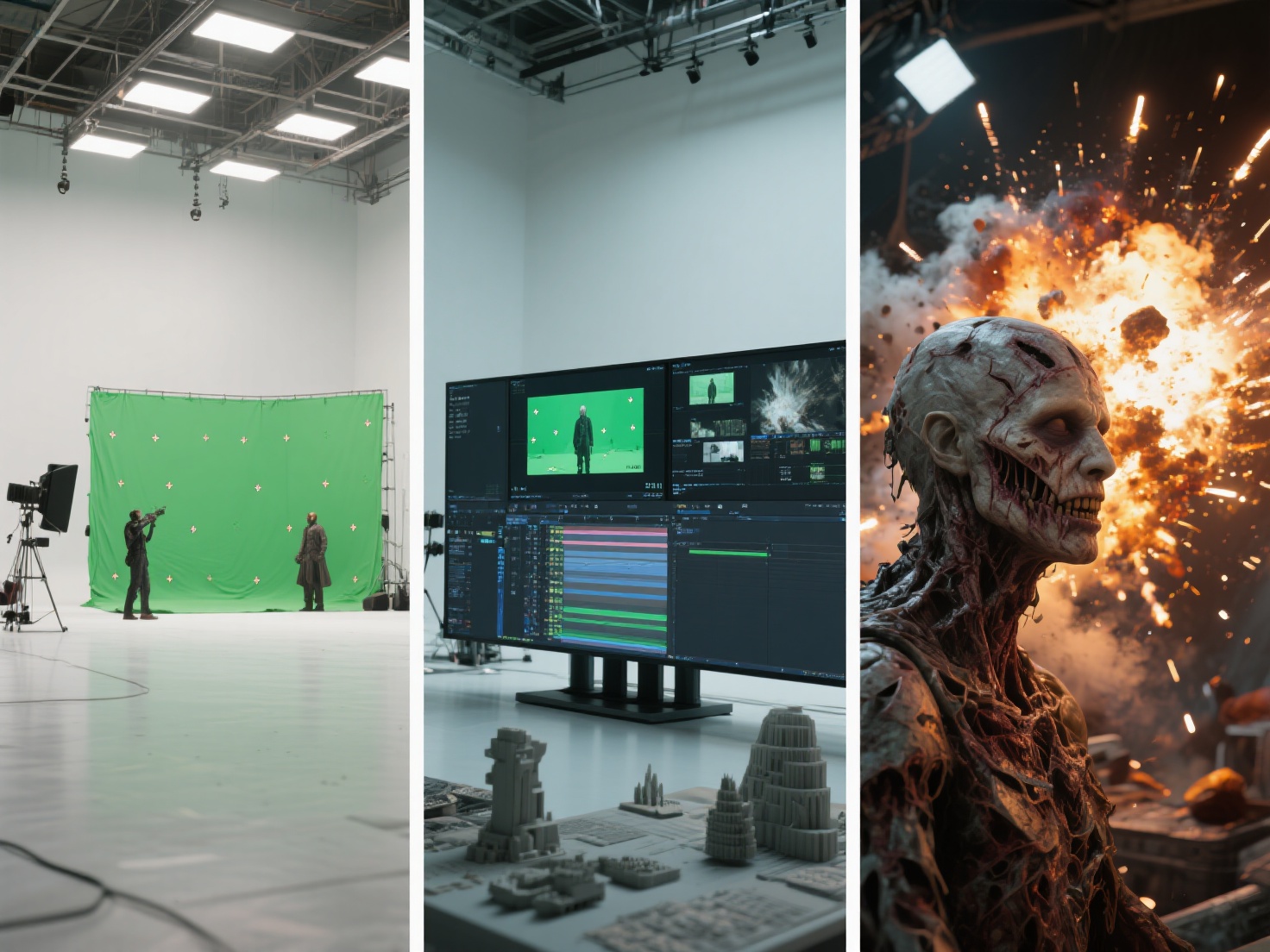
What is a Visual Effects (VFX) Artist?
A Visual Effects (VFX) artist is a creative professional who uses digital software to create, manipulate, or enhance imagery that is either too dangerous, expensive, or impossible to capture on live-action camera.
Whether it is integrating computer-generated (CG) monsters into live-action footage or simulating realistic weather conditions, VFX artists bridge the gap between imagination and reality on screen.
The VFX Career Landscape: Key Roles and Specializations
The VFX pipeline is highly collaborative, with various specialized roles working together to finalize a single shot. Here are the most common entry points and specializations in a visual effects career path:
1. Compositor
Compositors are the final stop in the VFX pipeline. They seamlessly blend live-action footage with CG elements (like 3D models, matte paintings, and particle effects) to ensure the lighting, shadows, and colors match perfectly. If you have a keen eye for detail and color theory, this is an excellent path.
2. 3D Generalist
A 3D Generalist is a versatile artist who can handle multiple aspects of the 3D pipeline, including modeling, texturing, rigging, and animation. This role is highly sought after in smaller studios, advertising agencies, and freelance projects where artists need to wear multiple hats.
3. FX Technical Director (TD)
FX TDs are the masterminds behind complex simulations. They create dynamic effects like fire, water, smoke, explosions, and destruction. This role requires a strong understanding of physics, mathematics, and advanced node-based software.
4. Lighting and Rigging Artists
- Lighting Artists ensure that CG elements look realistic by replicating real-world lighting conditions within digital environments.
- Rigging Artists create the digital “skeletons” and controls for 3D characters and vehicles, allowing animators to move them naturally.
5. VFX Supervisor
This is a senior leadership role. A VFX Supervisor works directly with the film’s director, managing the entire VFX team from pre-production through post-production to ensure the creative vision is met on time and on budget.
Essential VFX Skills and Software
To succeed in your VFX career, you need a mix of technical software proficiency and a strong artistic eye. While no single artist needs to master every tool, familiarizing yourself with industry standards is crucial.
Core Software by Specialization
| Specialization | Industry Standard Software | Best Use Case / Features |
|---|---|---|
| Compositing | Nuke, After Effects | Nuke is the undisputed king of feature film compositing. After Effects is great for motion graphics and indie VFX. |
| Simulations & FX | Houdini | Houdini’s node-based procedural workflow makes it the standard for complex particle and fluid simulations. |
| 3D Generalist/Modeling | Maya, Blender | Maya is the industry standard for animation and rigging. Blender is incredibly popular for indie creators and freelancers. |
| Texturing & Materials | Substance Painter | The go-to tool for creating realistic, PBR (Physically Based Rendering) textures and materials. |
Education Paths: Degree vs. Self-Taught
You do not necessarily need a traditional university degree to break into VFX. Studios hire based on the quality of your portfolio, not your diploma.
- University Degrees: Provide structured learning, networking opportunities, and access to expensive hardware.
- Online Courses/Bootcamps: Platforms like Gnomon, CGMasterAcademy, or FXphd offer highly specialized, cost-effective training.
- Self-Taught: By utilizing YouTube tutorials, forums, and affordable software like Blender, many artists successfully build their VFX skills entirely on their own.
Real-World Applications: Building Your Portfolio and Job Search
Understanding the theory is only half the battle. To actually secure a job, you need a stunning Demo Reel and a smart job search strategy.
How to Build a Winning VFX Demo Reel
Your demo reel is your ultimate resume. It should be a 1-to-2 minute video showcasing only your absolute best work.
- Prioritize Quality Over Quantity: Three flawless shots are vastly better than ten mediocre ones.
- Show Process (Breakdowns): Include “before and after” wipes to show how you built the shot layer by layer.
- Tailor Your Reel: If you are applying for an FX TD role, do not fill your reel with character animation. Tailor the content to the specific job you want.
Job Search Strategies and Salary Expectations
VFX artists can work in large feature film studios (like ILM or Weta FX), smaller commercial houses, or as remote freelancers.
- Entry-Level (Junior): Expect to start as a Junior Artist or Matchmove/Rotoscopy Artist. Salaries typically range from 50,000 to 70,000 annually, depending on location.
- Mid to Senior Level: With 3–5 years of experience, salaries jump to 80,000–120,000+.
- Networking: Join platforms like ArtStation and LinkedIn. Attend industry events like SIGGRAPH or local VFX meetups to get your work in front of recruiters.
Best Practices for Aspiring Visual Effects Artists
To stand out in a competitive job market, keep these actionable tips in mind:
- Specialize Early, Generalize Later: Large studios hire specialists. Focus on becoming incredibly good at one thing (e.g., just lighting or just compositing) to get your foot in the door.
- Train Your “Eye”: Technical skills can be taught, but an artistic eye takes practice. Study real-world photography, lighting, anatomy, and physics to make your digital work believable.
- Embrace AI and New Technologies: The VFX industry is rapidly evolving. Tools like Unreal Engine (for real-time virtual production) and AI-powered 3D asset generators are becoming standard. Learning how to integrate AI into your workflow to speed up tedious tasks will make you a highly valuable asset to any studio.
- Accept Constructive Criticism: VFX is an iterative process. Learn to detach your ego from your art and embrace feedback from supervisors and peers.
Conclusion: Kickstart Your VFX Journey with Next-Gen Tools
Figuring out how to become a VFX artist requires dedication, the right software, and an outstanding portfolio. Whether you choose to become a compositor, an FX TD, or a 3D generalist, your visual effects career path will be defined by your ability to adapt, learn, and create stunning visual narratives.
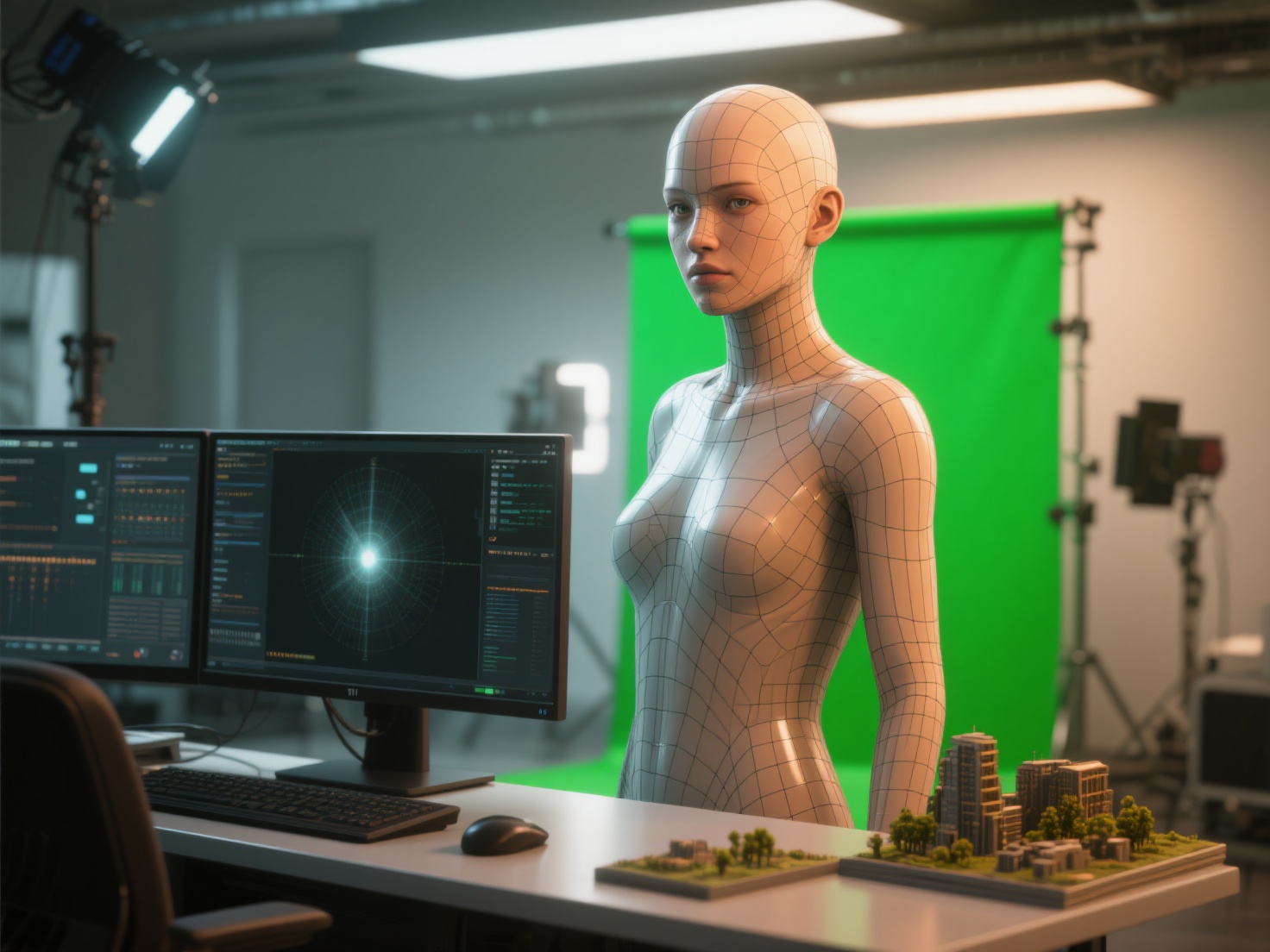
When building out environments or background props for your demo reel, modeling every single asset from scratch can take hundreds of hours—time that could be better spent refining your lighting, simulations, or compositing. This is where leveraging AI tools can give you a massive competitive advantage.
Hitem3D is a next-generation AI-powered 3D model generator that can drastically speed up your VFX asset creation pipeline. Built on the proprietary Sparc3D (high precision) and Ultra3D (high efficiency) models, Hitem3D transforms simple 2D images into high-fidelity, production-ready 3D models with clean geometry.
For VFX artists, Hitem3D offers incredible differentiators:
- Invisible Parts Technology: It intelligently reconstructs hidden or invisible structures beyond the visible surface.
- De-Lighted Textures: It automatically removes baked-in lighting and shadows, providing true 4K PBR-ready materials that can be perfectly relit in Maya, Blender, or Unreal Engine.
- Production-Ready Formats: Export directly to FBX, OBJ, GLB, or USDZ with resolutions up to 1536³ Pro (up to 2M polygons).
- Free Retry System: Regenerate your results without wasting additional credits.
Trusted by creators in over 50 countries, Hitem3D empowers you to populate your VFX scenes faster and focus on what truly matters: making your shots look cinematic and breathtaking.
Create For Free -> https://www.hitem3d.ai/create
Frequently Asked Questions (FAQ)
1. Do I need a college degree to get a job in VFX?
No. While a degree in computer graphics or animation can provide good foundational knowledge and networking, the VFX industry is entirely portfolio-driven. If your demo reel is outstanding, studios will hire you regardless of your educational background.
2. What is the best software to start learning for a VFX career?
For absolute beginners, Blender is highly recommended because it is free, open-source, and contains tools for modeling, texturing, rigging, and compositing. Once you understand the basics, you can transition to industry standards like Maya (for 3D), Nuke (for compositing), or Houdini (for FX).
3. Is it too late to switch to a visual effects career path?
It is never too late. Many successful VFX artists transition from careers in graphic design, architecture, photography, or software engineering. Your previous experience often provides unique perspectives—such as an architect’s grasp of scale or a photographer’s understanding of camera lenses—that translate beautifully into VFX.
4. How long does it take to become a VFX artist?
With dedicated daily practice, a self-taught artist or bootcamp student can build a junior-level demo reel in 12 to 18 months. However, mastering the craft is a lifelong journey, as software and techniques constantly evolve.